The Epicenter Nanny State Index is a league table of the best and worst places in the European Union to eat, drink, smoke and vape. Finland tops the table as the least free country. Germany is the freest country.
This paper explains why additional taxes on the turnover of companies with a large digital presence would be disproportionate, discriminatory and damage the European economy. They would further complicate the tax system for no obvious benefit, but substantial costs.
Following on from research published by the IEA between 2012 and 2014, this discussion paper revisits the issue of state-funded activism in the UK and EU.
A popular explanation for economic scandals, crises and suboptimal market outcomes is the lack of government regulation. This interpretation is intensively promoted by the promoters of a “bridled” market and by the communication departments of the respective administrations: only the supervision and control of the market economy by the bureaucratic state would ensure the integrity of economic actors. This would even apply to competition, which would allegedly be endangered without a dedicated authority.
Do European companies pay their fair share of tax? Many companies headquartered in France, Germany, Italy and Spain show very low effective corporate tax rates (ECTRs). Their effective tax rates are often much lower than those of digital corporations, including the largest tech companies headquartered in the United States.
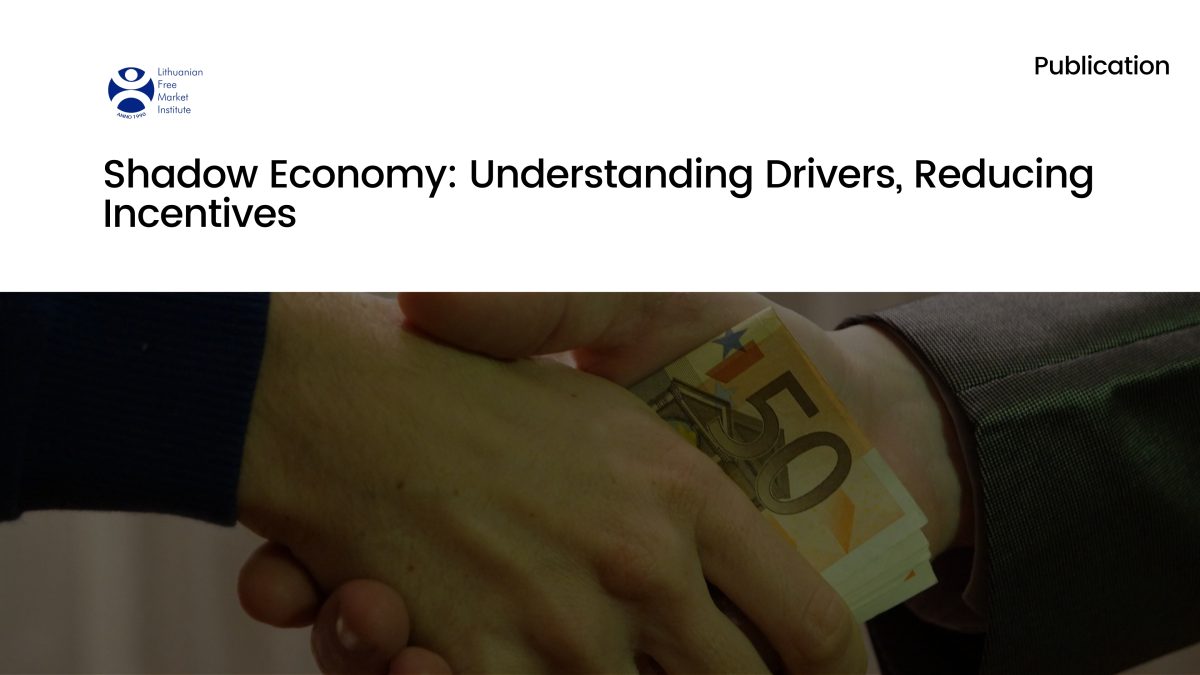
The aim of this publication is to present and analyse the results of representative population surveys into public perceptions of the shadow economy and engagement in illicit activities that were conducted in six countries – Lithuania, Latvia, Estonia, Poland, Sweden and the Czech Republic – between March and April, 2018.
Raising mandatory minimum wage might seem to be a simple policy that serves to increase wages for low-income earners. Politicians use this policy with good intentions to reduce poverty and inequality. Yet, it has serious drawbacks and creates unintended consequences.
The popular account of offshore financial centres as hotbeds of tax evasion is an outdated caricature that bears little resemblance to how OFCs operate. Our new report debunks a number of myths surrounding OFCs – or tax havens – and outlines the important economic function they play in a globalised world.
According the latest IBL Super Index, Italy is the sick man of Europe. Despite relatively rosy macroeconomic projections for the whole EU, the gap between Italy and its European partners has increased five fold since 2014.