Posted workers are temporarily sent from one member state to another, usually for projects of short duration. There were 1.1. million posted workers in the EU in 2015, equivalent to 0.4 per cent of all full-time employment.
On 15 June 2017, the Directorate General for Internal Policies published a report which maps the recent history of privatisation and examines the risk of precarious work in privatised utilities.
By performing an econometric analysis on the Fraser Institute’s “Economic Freedom of the World: Annual Report 2015,” it is found that EU membership is positively associated with economic freedom.
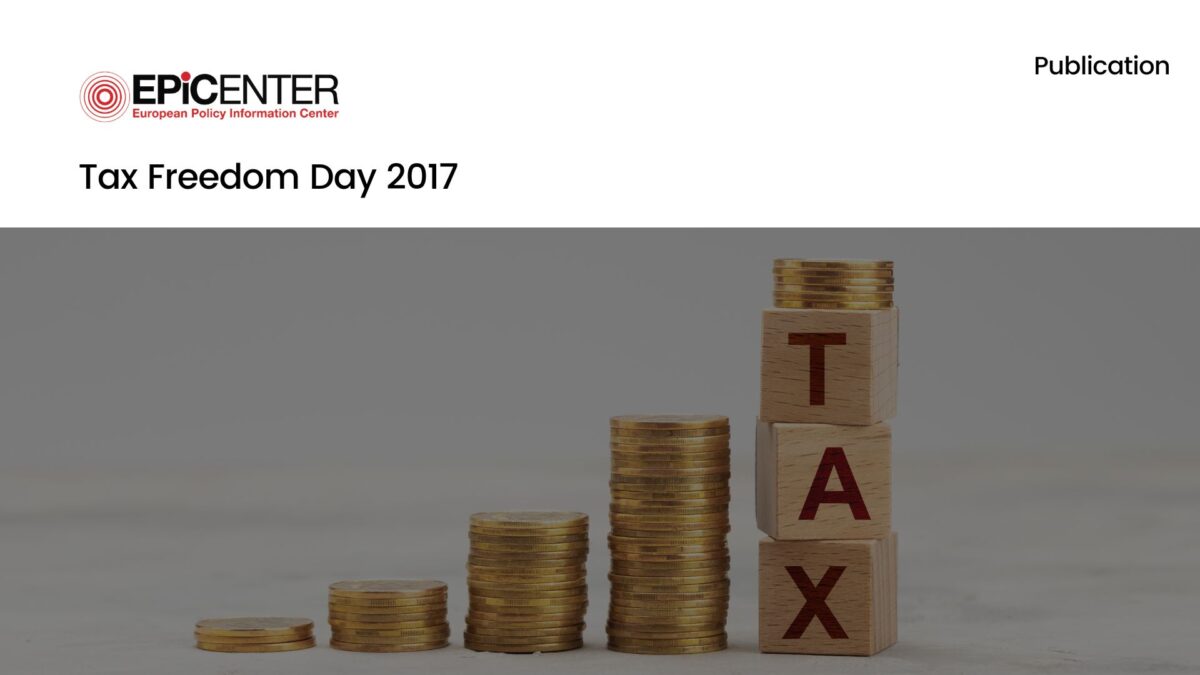
The purpose of this study is to compare the tax and social security burdens of individual employees earning typical salaries in each of the 28 member states of the European Union and, in doing so, to determine a “tax liberation day” — measuring how much of each year’s work is devoted to paying taxes — for workers in each country.
In 2017, the average Spaniard will have worked 178 days in order to fulfill their tax obligations. In other words, Tax Freedom Day, calculated annually by Think Tank Civismo, takes place on 28 June, one day ahead of last year’s.
The EPICENTER Nanny State Index is the only comprehensive league table of lifestyle regulations. The latest data suggest that the EU is becoming a worse place to eat, drink, vape and smoke because of overregulation.
According to the latest IBL Super Index, the degree of internal divergence within Eurozone countries keeps increasing. This means that the gap between Eurozone periphery countries, such as – for example – Italy, and other comparable countries in the European Union is widening.
The past record of industrial policy in the UK is a catalogue of waste and ineffectiveness. By the end of the 1970s it was widely accepted that the strategy of attempting to pick winners and promoting national champions was fundamentally flawed.