Publications

July 13, 2020

Aiming at a Common Market, Not Redistribution

In 2018 the European Commission presented its proposed EU budget as “new,” “modern” and “focused.” However, in terms of its expenditure and revenue the budget proposal continues to diverge significantly from what would appropriately address current challenges facing the EU27 and contribute to its economic dynamism, well-being and security.
June 25, 2020

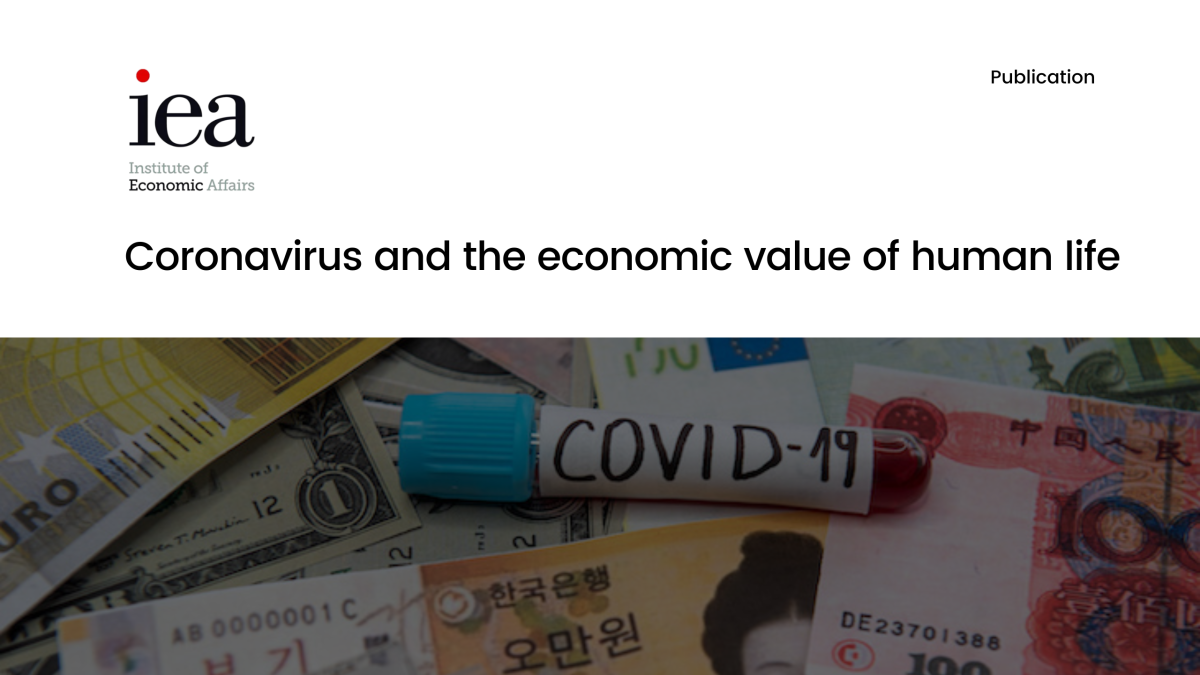
Coronavirus and the Economic Value of Human Life

The Covid-19 crisis has provided many grim examples of some familiar problems in health economics and cost-benefit analysis, and of the ‘tragic choices’ that sometimes need to be made.
June 18, 2020

Inflation: The Next Threat?

The policy reaction to the Covid-19 pandemic will increase budget deficits massively in all the world’s leading countries. The deficits will to a significant extent be monetised, with heavy state borrowing from both national central banks and commercial banks.
May 14, 2020

Model Behaviour: How Economists Can Shape the Post-lockdown Word

The seminal work on epidemiological models was carried out in the late 1920s and early 1930s. The models have developed substantially since then, but their key drivers are still essentially those discovered nearly a century ago.
May 11, 2020

The Problem is Not Testing Capacity but Testing Participation

This paper argues that testing participation – and not testing capacity – is the biggest obstacle to a successful “test and isolate” strategy, as recently proposed by Paul Romer.
April 29, 2020

Going Viral: the History and Economics of Pandemics

Pandemics are a recurring feature of human history. In the modern world, since the 1770s, we have had a series of pandemics, with a series of cholera ones in the nineteenth and early twentieth centuries, and a series of five influenza ones since 1890.
April 17, 2020

Responses to Covid-19 of Governments in Selected Countries

The COVID-19 pandemic is a serious challenge for societies around the world. In response to it not only individuals are changing their behaviour, but also governments are taking various policy actions.

Share this content

EPICENTER publications and contributions from our member think tanks are designed to promote the discussion of economic issues and the role of markets in solving economic and social problems. As with all EPICENTER publications, the views expressed here are those of the author and not EPICENTER or its member think tanks (which have no corporate view).

Subscribe

* indicates required

EPICENTER publications and contributions from our member think tanks are designed to promote the discussion of economic issues and the role of markets in solving economic and social problems. As with all EPICENTER publications, the views expressed here are those of the author and not EPICENTER or its member think tanks (which have no corporate view).