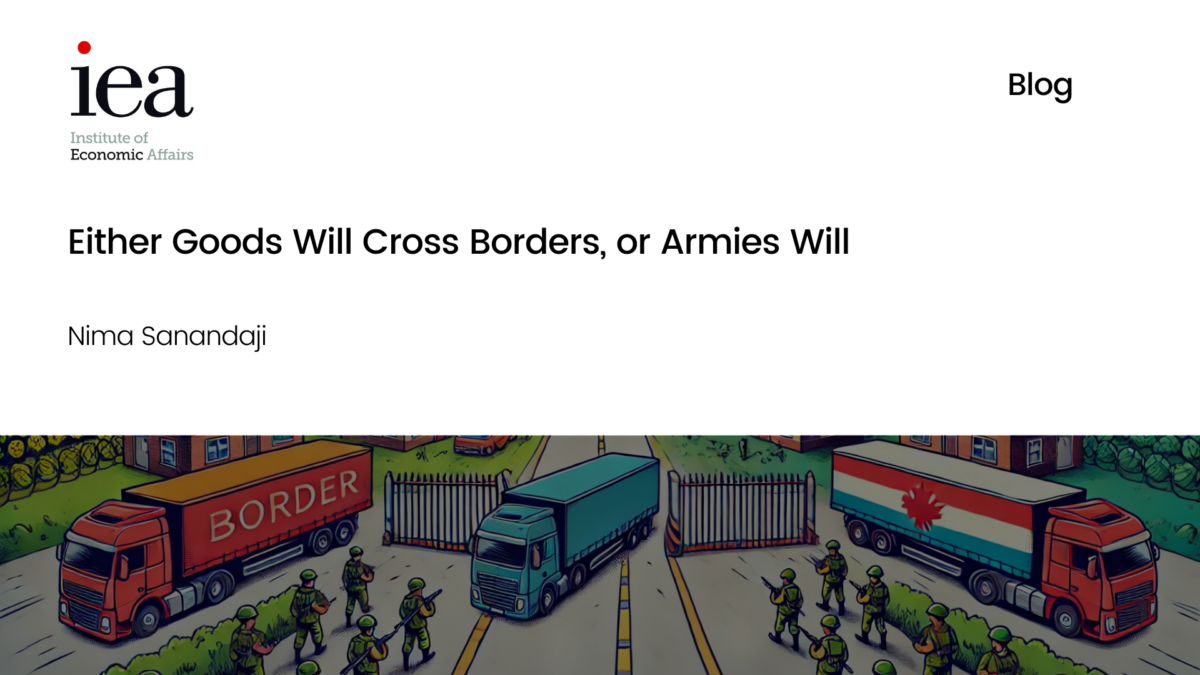

The practice of economic sanctions is not new. 2,400 years ago, Athens declared a trade embargo on the neighbouring city state of Megara, strangling the city’s trade.
With the Italian Parliament still deep into its summer break, several important political and economic questions are gripping the minds of many voters.
13 December marks Credit Day across the European Union. This is the day when, on average, European countries’ central governments exhaust their annual tax revenue and start relying on borrowed money to fulfil their functions – 18 days before the end of the year. According to a study by the Institut Économique Molinari, this is 7 days later than last year, which is a substantial improvement.
The Commission’s decision to fine Google for unfair practice was based on a misunderstanding of the Android ecosystem and a mistaken definition of the relevant market. This allowed Google’s activities to be wrongly cast as those of a monopoly abusing its position.
Production taxes in France have long been a contentious issue closely linked to employment and wage growth. France currently sets one of the highest levels of production taxes in the EU, which can be seen as an example of the government’s habitual over-taxation.
The new media economy operates differently from other industries when it comes to regulation. The marginal costs of technological giants mean that their interactions are distinct from other industries where governments try to prevent cartels from occurring.
Free trade improves the well-being of all parties to it. The most significant way that trade achieves this outcome is by enabling and incentivising specialisation in production, and also encouraging mechanisation and innovation. As specialisation deepens, and as mechanisation and innovation advance, the per-person output of goods and services increases.
The European Commission has proposed a tax on revenues raised from certain digital activities. However, this is essentially a political gesture with only weak economic foundations.