This paper argues that testing participation – and not testing capacity – is the biggest obstacle to a successful “test and isolate” strategy, as recently proposed by Paul Romer.
Pandemics are a recurring feature of human history. In the modern world, since the 1770s, we have had a series of pandemics, with a series of cholera ones in the nineteenth and early twentieth centuries, and a series of five influenza ones since 1890.
The COVID-19 pandemic is a serious challenge for societies around the world. In response to it not only individuals are changing their behaviour, but also governments are taking various policy actions.
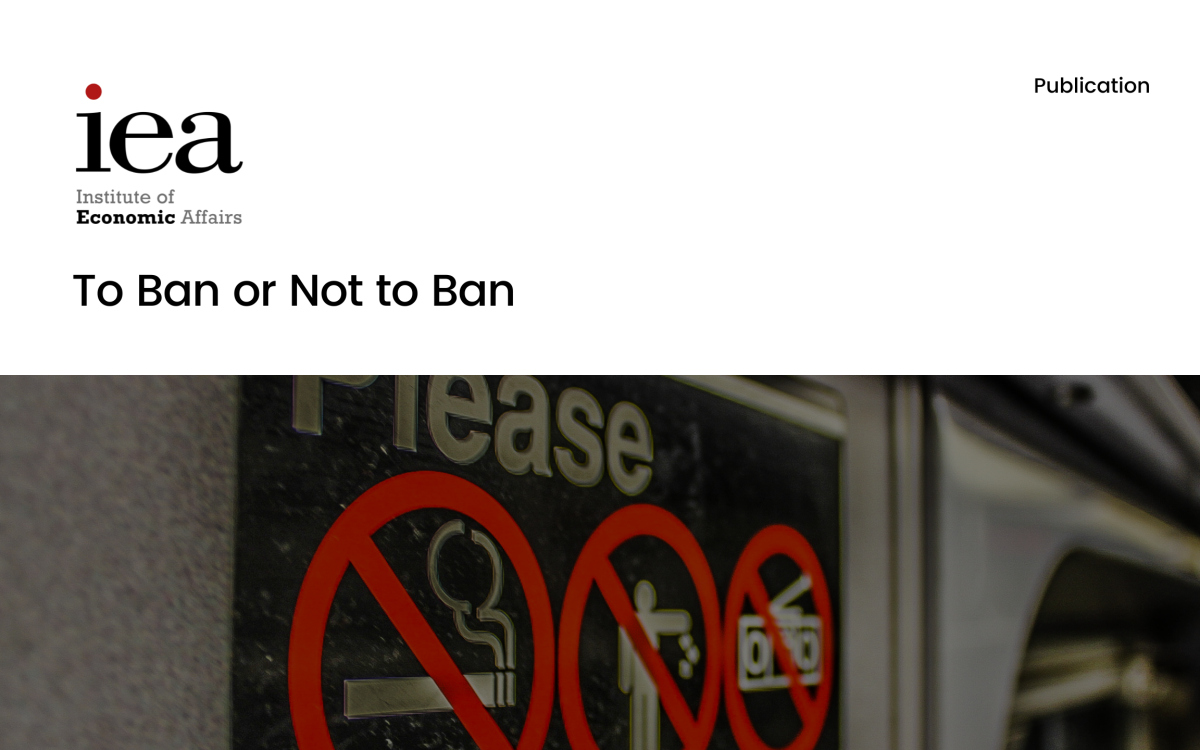
A ban on opening a new supermarket is evidence that people want a new supermarket, for if they did not there would be no need for a ban. The same is true of chlorinated chicken, gambling machines and many other products and activities that we are told need to be banned or restricted.
Denmark’s fat tax remains the leading example of an ambitious anti-obesity policy being tested in the real world. The results failed to match the predictions of computer models and the failed experiment has since been largely swept under the carpet in public health circles.