School of Thought – 101 Great Liberal Thinkers profiles the lives and ideas of some of the leading thinkers on individual liberty – from ancient times to the present day.
Education reforms that allow new educational providers to supply schooling into a state system can improve parental satisfaction and raise learning outcomes through consumer choice.
Legal interventions in hiring and firing practices are often referred to as employment protection legislation that include working hours, health and safety requirements. The extent of legislative intervention and its quality significantly affects the functioning of the labour market.
Germany has overtaken the Czech Republic to become the EU’s most liberal country, according to the 2019 edition of the Nanny State Index. Finland remains the least free member state when it comes to drinking, smoking, vaping and food regulation, with Lithuania and Estonia in second and third place respectively.
Labour market flexibility may be characterized by the market participants’ abilities to deviate from standard labour regulations and typical forms of employment. Such possibilities may not only provide positive outcomes to both employers and employees, but they may also benefit the whole economy.
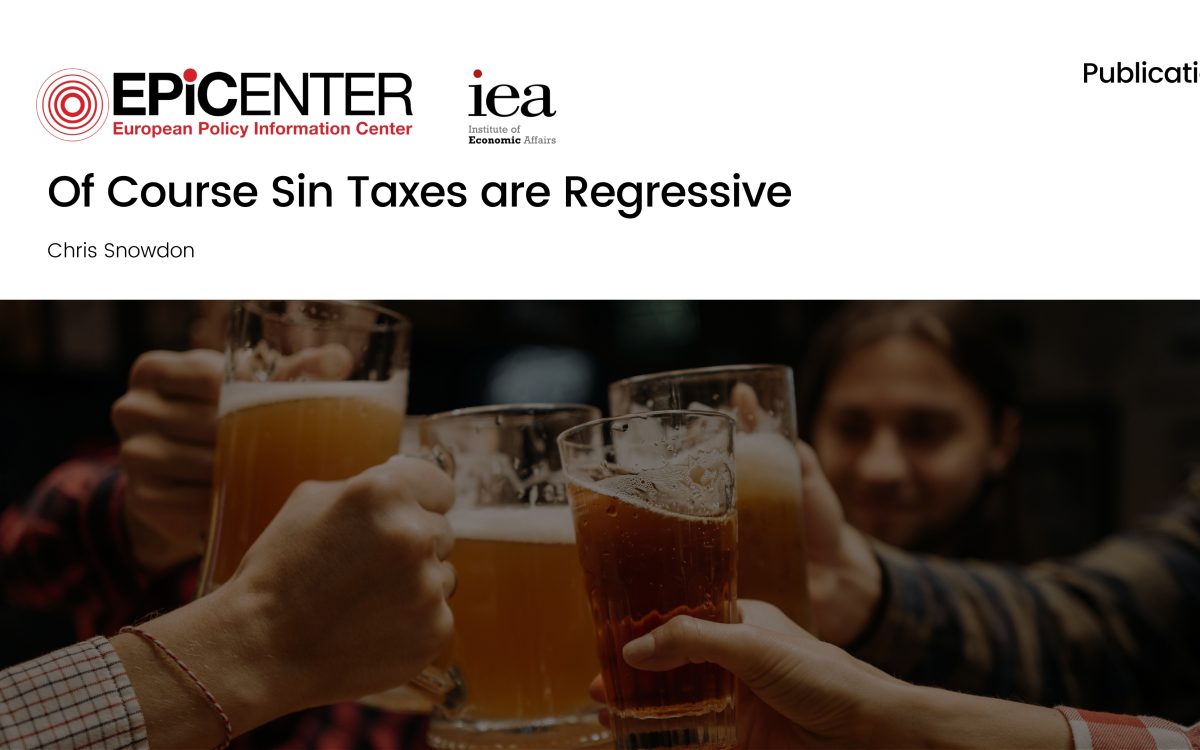
There should be no debate about whether taxes on food, alcohol, tobacco and soft drinks (‘sin taxes’) are regressive. It can be easily demonstrated empirically, and countless studies have done so. As with most indirect taxes, they take a greater share of income from the poor than from the rich in all plausible scenarios.
Our new league table of nanny state regulation shows that punitive taxation and excessive regulation of safer nicotine alternatives has increased across the EU. Finland and Hungary have the most excessive regulations for safer nicotine products, whereas Sweden and the UK have the most liberalized markets.
Several local authorities in Britain have introduced ‘zoning laws’ to restrict fast food outlets within a certain distance of schools. Public Health England, the British Medical Association and the Mayor of London have all endorsed this policy as a way of tackling childhood obesity.