As growth rates in the Eurozone gather steam, policymakers’ concerns are increasingly shifting to low inflation. According to Eurostat, consumer prices in the Eurozone have declined by 0.2% in the past year.
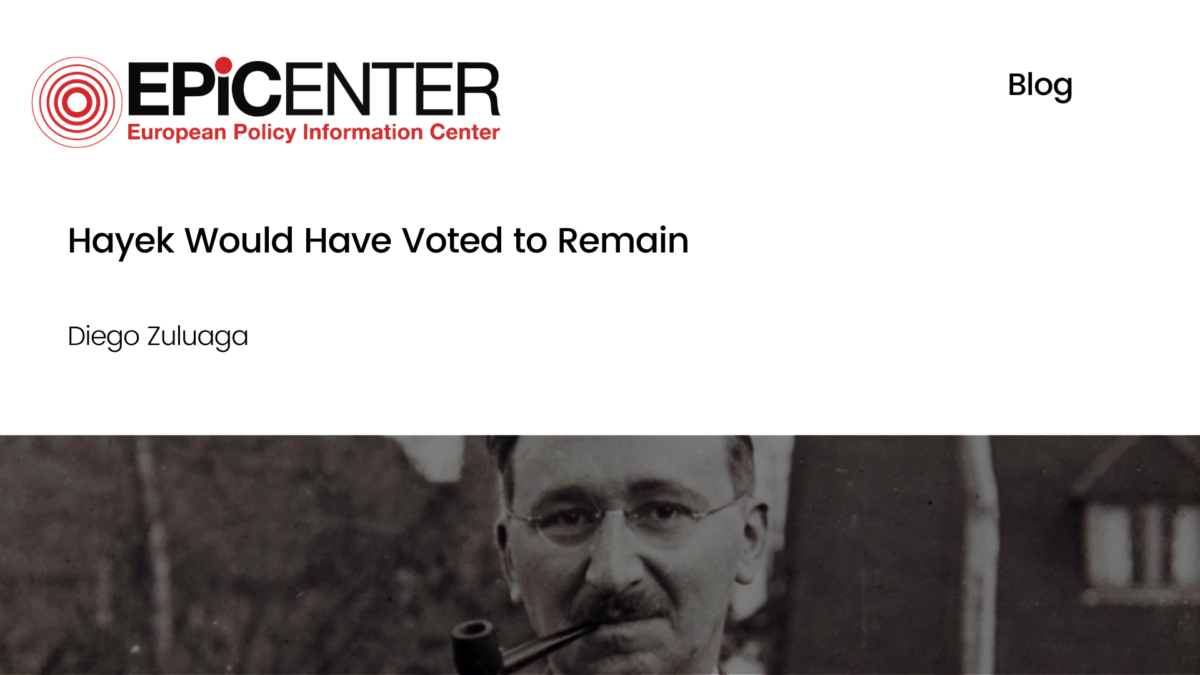
To conjecture what Hayek’s stance might have been on Britain’s EU referendum and the current state of the European project more generally, it is instructive to consider his biography.
The sharing economy is based on reductions in transaction costs which enable exchanges that were previously not possible. Sharing economy firms facilitate a more efficient use of assets, to the benefit of both asset owners and prospective users. Its potential positive impact on welfare has been estimated at over €1,000 per EU citizen.
Post-crisis financial regulation of banks and new regulations being developed for insurance companies have likely contributed to the dearth of financing for EU companies. The Commission must consider the adverse impact that regulatory measures, both at Union and Member State levels, have had on business finance.
The Energy Union can further the process of opening up and integrating energy markets within the European Union. However, there is a risk that behind the proposal a new wave of regulation looms, both at national and EU levels.
The development of television and mobile communications in the coming years will depend on the future of the UHF band, currently the subject of discussions at national and international levels. Regulators should resist the temptation of premature and radical intervention and abandon the traditional dirigiste model of spectrum management.
The success of the internal market for products can and should be repeated for energy. Natural barriers to market entry in terms of infrastructure can be overcome by private and/ or public investment if proper returns on investment are allowed.
The measures proposed by the European Commission are not suitable for achieving a single market in card payment services. On the contrary, the measures proposed by EC would be harmful. The regulations would have the greatest negative effect on consumers, who are likely to incur relatively higher card handling fees, and to lose part of discounts or incentives.