The EU Commission launched a public consultation on the adoption of a Carbon Border Adjustment Mechanism (CBAM), i.e. a fee to be levied on imported goods.
The recent outrage sparked by the German-Franco proposal of an EU-Russia summit for Poland and the Baltic States shows how deeply the EU is split on Russia.
Most countries are not on track to meet their promises made under the Paris Agreement, as impactful climate action is often hindered by the high costs of decarbonisation.
With the Clean Energy for All Europeans package, the European Union has committed to being carbon-neutral by 2050. In order to achieve this goal, the EU Commission and the Member States have agreed upon binding targets to be met by 2030: emissions of greenhouse gases (GHGs) shall be cut by at least 40 per cent below 1990 levels, renewable energies shall cover at least 32 per cent of final energy demand, and energy efficiency shall be improved by at least 32.5 per cent as compared to business-as-usual.
The new European Green Deal plans to make the EU carbon neutral by 2050 while opening up new possibilities for development and employment. The European Commission wants to send a strong message to the world on dealing with climate change, but a number of thorny issues will need to be tackled.
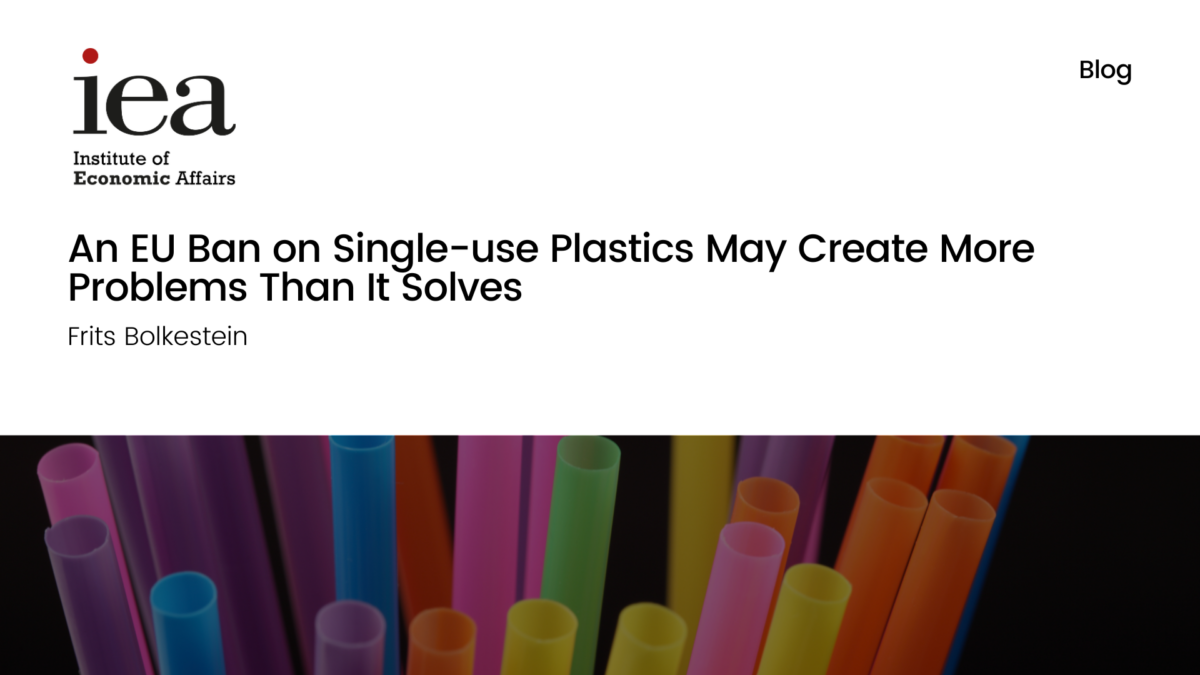
With the Commission and Parliament both starting their last legislative year, one of the last challenges left on the political agenda is what to do about single-use plastics. The proposal currently making its way through Parliament is to ban the sale of products made from single-use plastics, from cotton buds to plastic straws.
Economic growth is not necessarily bad for the environment. On the contrary, a richer world is in many ways a prerequisite for a greener existence. But it is crucial to understand how the market economy can help us release our creativity and learn from our mistakes. It helps us adapt and fix environmental problems.