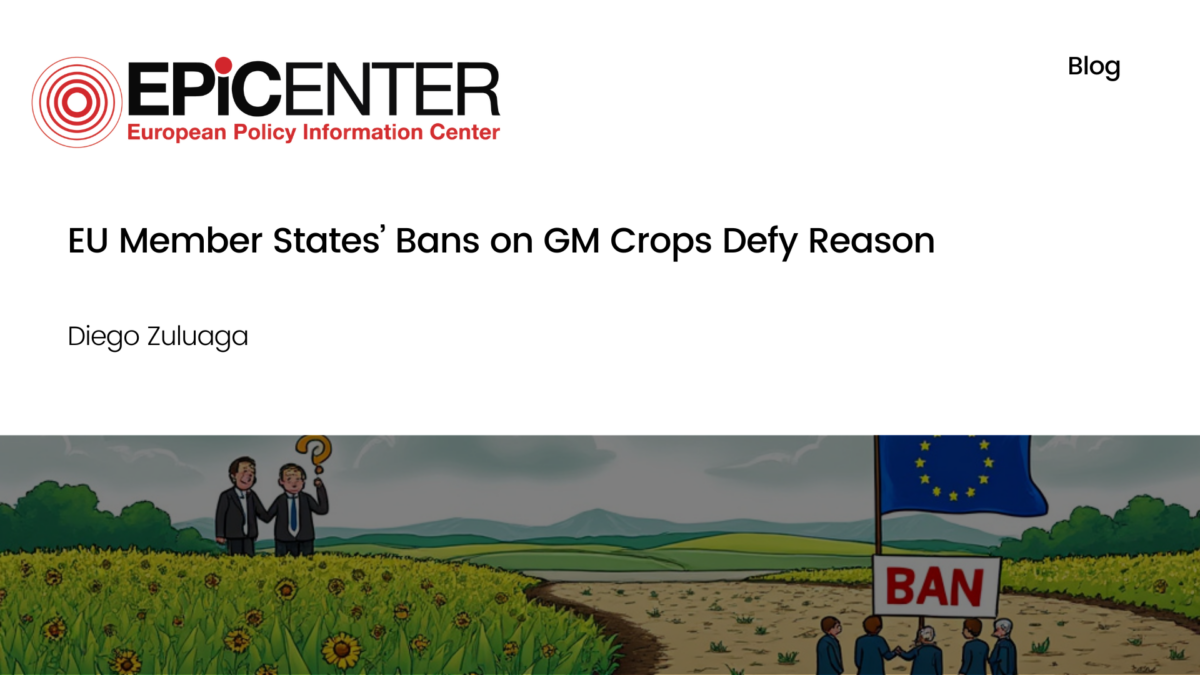
The ECJ ruled that Italy had been wrong to ban the cultivation of an EU-approved genetically modified maize. This was a big victory for the plaintiff, an Italian farmer who was denied the right to grow the MON 810 maize.
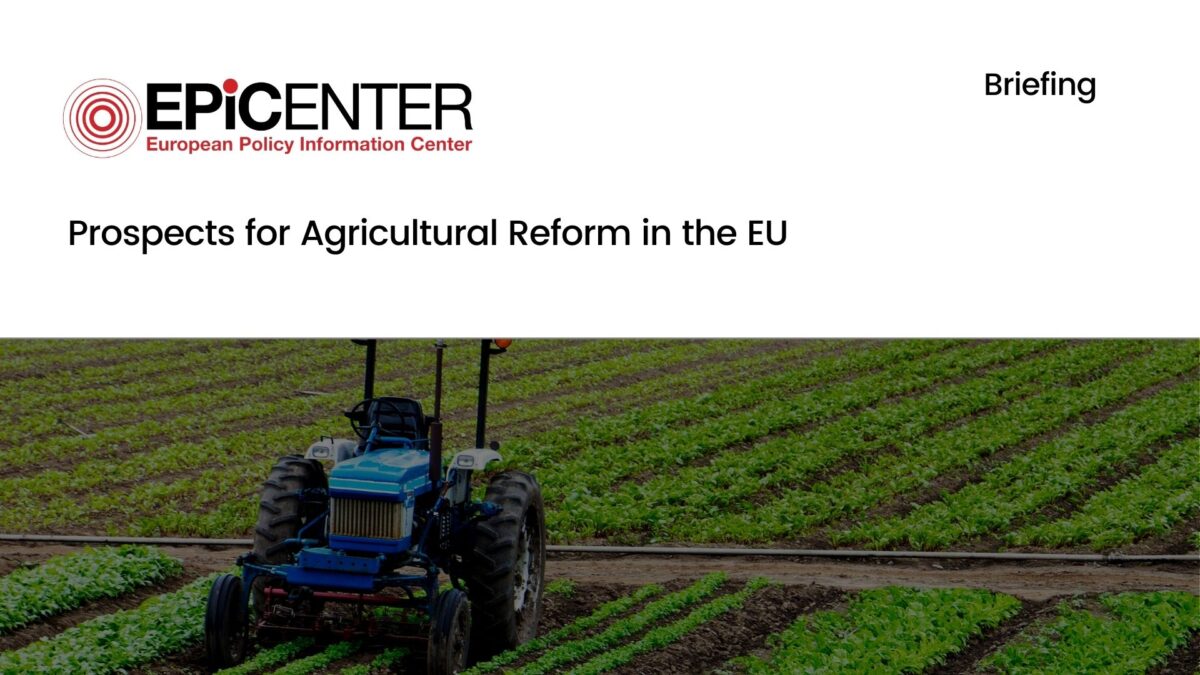
The EU Common Agricultural Policy (CAP) has undergone several waves of reforms over the last few decades. Yet, many market- and trade-distorting practices still persist, and the EU’s agricultural sector remains disproportionately dependent on public support when compared to its counterpart in other developed countries, such as Australia, Canada and New Zealand.
As the debate on the modernisation and simplification of the EU’s Common Agricultural Policy (CAP) gathers pace, European policymakers are called – once again – to re-think Europe’s farming sector.
The precautionary principle provides non-farming interest groups with a pseudo-official means of influencing policy. The result is a drift towards overregulation and regulatory failures which are in conflict with the efficient working of the single market.
According the European Commission, a Geographical Indication (GI) is “a distinctive sign used to identify a product as originating in the territory of a particular country, region or locality where its quality, reputation or other characteristic is linked to its geographical origin.” Under the system of GIs, the European Union has protected over 3,300 food and wine names with, as of 2010, an estimated value of €54.3 billion.
Population growth, natural resource scarcity and climate change will challenge agriculture to deliver food security in the coming decades. Innovative practices to address these challenges exist, they are hampered by complex legislation and perverse incentives.
The Common Agricultural Policy (CAP) is today the EU’s most expensive policy, taking up almost half of the annual budget. It is also its most interventionist and complex policy. Multiple reforms have created a system of decoupled payments to farmers that protect and prolong the life of small-scale farms and constrain large-scale farming and the evolution towards a more efficient industry structure.
On Sunday, the New York Times ran a powerful op-ed (“With GMO policies, Europe turns against science,” Sunday 25 Oct 2015) questioning the stance many EU countries have taken on the cultivation of genetically modified crops.