Publications

July 4, 2019

Tailoring the Work and Leisure Trade-off

Legal interventions in hiring and firing practices are often referred to as employment protection legislation that include working hours, health and safety requirements. The extent of legislative intervention and its quality significantly affects the functioning of the labour market.
June 26, 2019

The Case Against Tech Taxes

This paper explains why additional taxes on the turnover of companies with a large digital presence would be disproportionate, discriminatory and damage the European economy. They would further complicate the tax system for no obvious benefit, but substantial costs.
June 20, 2019

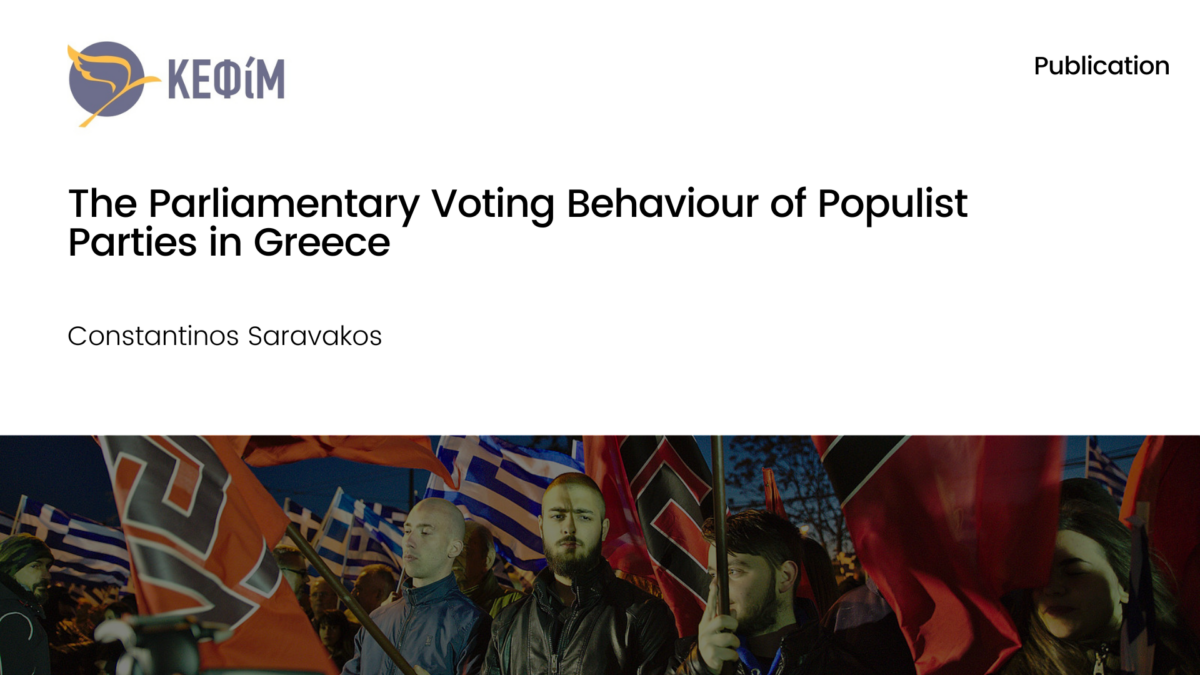
The Parliamentary Voting Behaviour of Populist Parties in Greece

Timbro’s methodological distinction in the Authoritarian Populism Index between extreme and authoritarian populist parties is highly relevant in the Greek political environment, as shown by the parliamentary voting patterns in the period 2012 – 2018.
May 28, 2019

Not Everyone’s Cup of Tea

MiFID II, together with MiFIR (Regulation (EU) No 600/2014), was intended to create a more transparent, competitive and integrated financial market in the EU by reducing trading outside regulated markets, increasing protection for investors and consumers, and improving financial stability.
April 30, 2019

Nanny State Index

Germany has overtaken the Czech Republic to become the EU’s most liberal country, according to the 2019 edition of the Nanny State Index. Finland remains the least free member state when it comes to drinking, smoking, vaping and food regulation, with Lithuania and Estonia in second and third place respectively.
March 1, 2019

Battle Resumes – The Copyright Directive is Back

The Directive on Copyright in the Digital Single Market (the “Directive”) is back. The issues with the Directive were described in our September 2018 briefing The Copyright Directive – The EU Battles the Internet.
February 26, 2019

Better Regulation: Risks, Markets, Responsibility

A popular explanation for economic scandals, crises and suboptimal market outcomes is the lack of government regulation. This interpretation is intensively promoted by the promoters of a “bridled” market and by the communication departments of the respective administrations: only the supervision and control of the market economy by the bureaucratic state would ensure the integrity of economic actors. This would even apply to competition, which would allegedly be endangered without a dedicated authority.
February 20, 2019

Corporate Tax Out of Control

Do European companies pay their fair share of tax? Many companies headquartered in France, Germany, Italy and Spain show very low effective corporate tax rates (ECTRs). Their effective tax rates are often much lower than those of digital corporations, including the largest tech companies headquartered in the United States.

Share this content

EPICENTER publications and contributions from our member think tanks are designed to promote the discussion of economic issues and the role of markets in solving economic and social problems. As with all EPICENTER publications, the views expressed here are those of the author and not EPICENTER or its member think tanks (which have no corporate view).

Subscribe

* indicates required

EPICENTER publications and contributions from our member think tanks are designed to promote the discussion of economic issues and the role of markets in solving economic and social problems. As with all EPICENTER publications, the views expressed here are those of the author and not EPICENTER or its member think tanks (which have no corporate view).

Privacy Overview

This website uses cookies so that we can provide you with the best user experience possible. Cookie information is stored in your browser and performs functions such as recognising you when you return to our website and helping our team to understand which sections of the website you find most interesting and useful.