Briefings

October 1, 2014

The European Union and Lifestyle Freedoms

Dealing with public health challenges requires some degree of government action to protect the population from contagious diseases and pollution. Given the EU’s commitment to the free movement of people, it is appropriate that member states work together to identify and tackle communicable diseases with initiatives such as the Early Warning and Response System.
October 1, 2014

Taxation and the Digital Economy

It is widely acknowledged that Europe lags behind when it comes to digital entrepreneurship. The largest players in the digital economy are based elsewhere, primarily in the US, Japan, Israel, and even China.
October 1, 2014

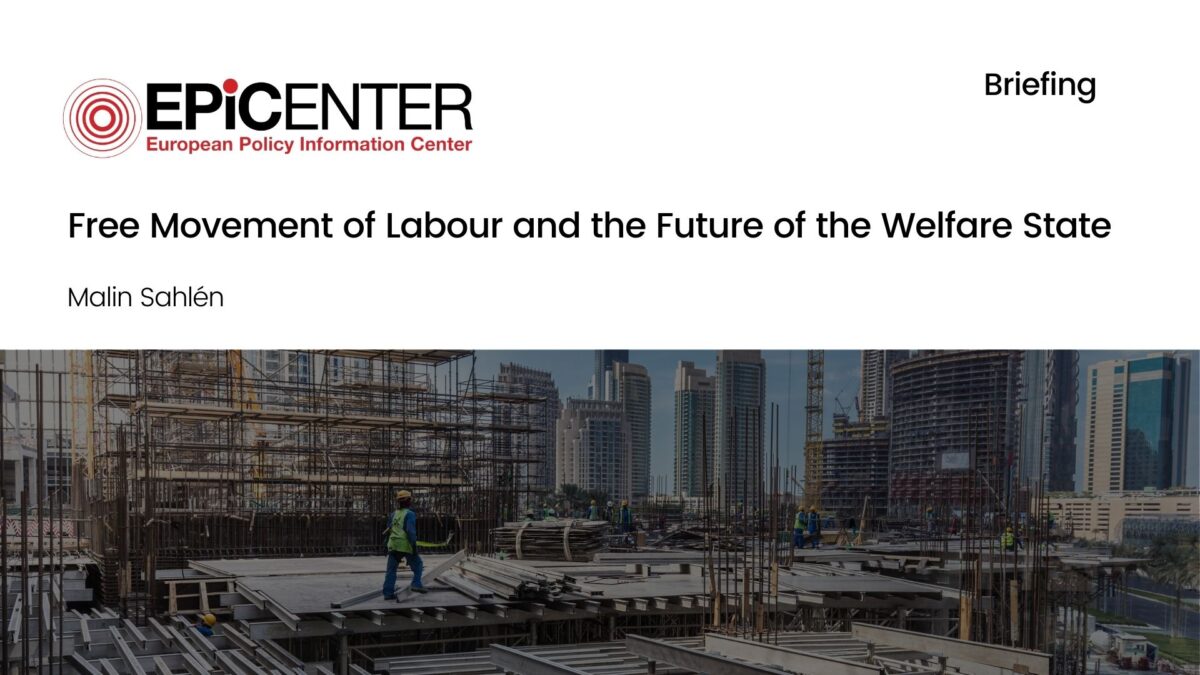
Free Movement of Labour and the Future of the Welfare State

The free movement of workers across Member States is one the main historic achievements of the European integration process. Not only is such freedom important from the individual worker’s perspective, dramatically increasing the scope of potential employment opportunities. In a situation of uneven economic development, such mobility has also proven to be an important mechanism as a free-market regulator.
September 1, 2014

Towards a Robust Financial Sector – How Should Tax and Regulation Evolve?

The economic and financial crisis has affected the ability of the EU financial sector to channel funds towards the real economy. Heavy dependence on bank intermediation, combined with bank deleveraging and reduced investor confidence, has reduced funding to the economy.
May 1, 2013

Work Longer, Live Healthier: The Relationship Between Economic Activity, Health, and Government Policy

Higher state pension ages are not only possible (given longer life expectancy) and desirable (given the fiscal costs of state pensions) but later retirement should, in fact, lead to better average health in retirement.

Share this content

EPICENTER publications and contributions from our member think tanks are designed to promote the discussion of economic issues and the role of markets in solving economic and social problems. As with all EPICENTER publications, the views expressed here are those of the author and not EPICENTER or its member think tanks (which have no corporate view).

Subscribe

* indicates required

EPICENTER publications and contributions from our member think tanks are designed to promote the discussion of economic issues and the role of markets in solving economic and social problems. As with all EPICENTER publications, the views expressed here are those of the author and not EPICENTER or its member think tanks (which have no corporate view).

Privacy Overview

This website uses cookies so that we can provide you with the best user experience possible. Cookie information is stored in your browser and performs functions such as recognising you when you return to our website and helping our team to understand which sections of the website you find most interesting and useful.