Upcoming Events

3 November 2026, 12:30 to 14:15
Rue du Commerce 20, 1000 Bruxelles
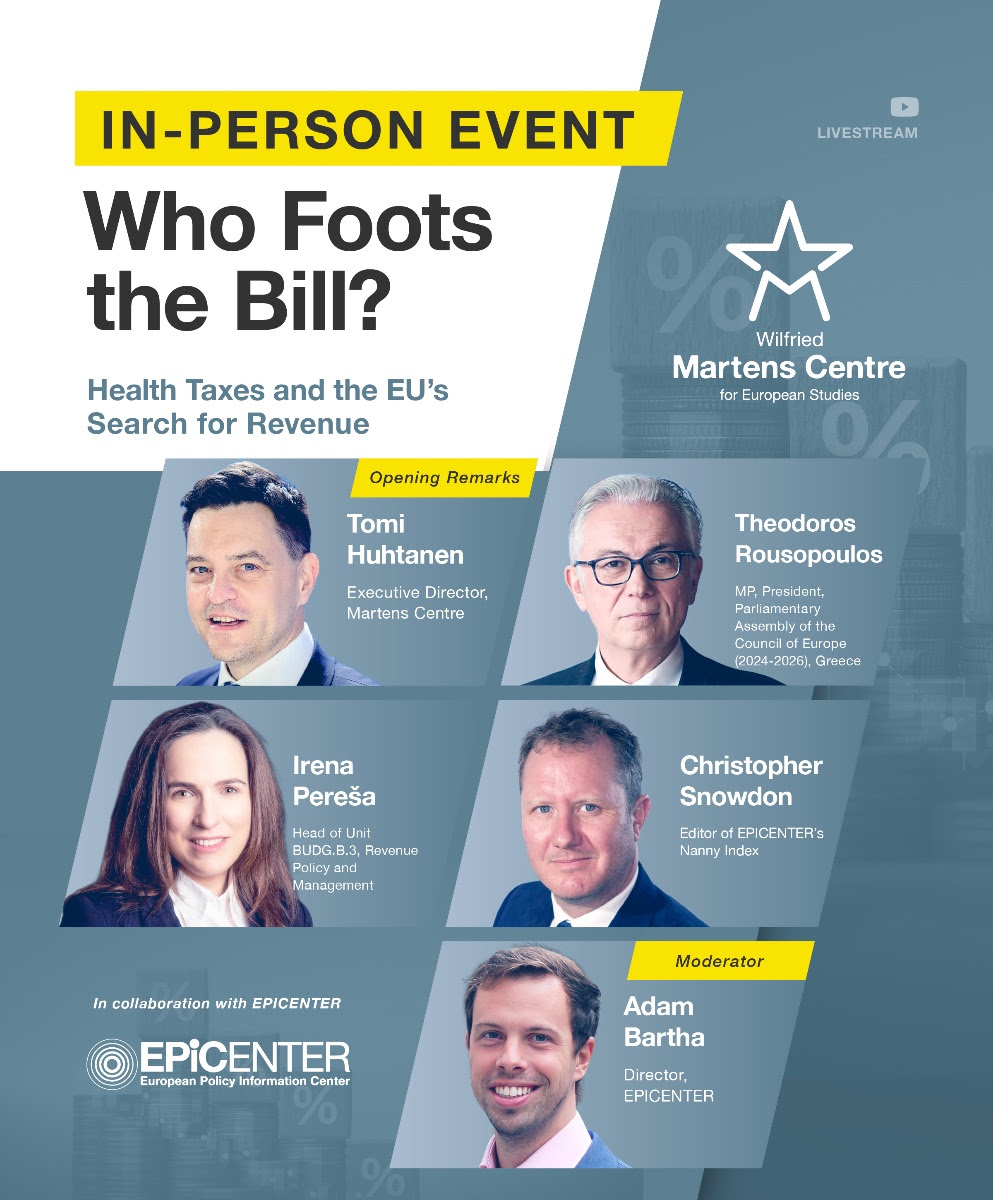
Today, a quarter of European children aged seven to nine are overweight or obese. Smoking is a major cause of preventable death in the EU. In order to improve health outcomes and its own budgetary situation, the European Commission's next budget leans on new own resources, including a tobacco levy, and a tax on foods high in fat, sugar, and salt is now openly discussed.
But can a tax designed to discourage consumption also serve as a reliable source of public revenue? And who will ultimately bear the cost: consumers, businesses, or lower income households? As Brussels looks for new ways to finance its priorities, these questions deserve closer scrutiny.
The Martens Centre and EPICENTER invite you to question whether a new levy would guide Europeans towards healthier choices or fill a budget hole. Drawing on the Nanny State Index and Hungary's own food-tax experiment, we will discuss how prosperity, not punishment, can lead to a healthier Europe. We ask a harder question than "tax or no tax". How do you improve health outcomes through growth, prosperity and a disciplined EU budget, rather than through a levy on the weekly shop?
4 November 2026, 08:00 to 10:00
European Parliament, Brussels (Spinelli 7F387)
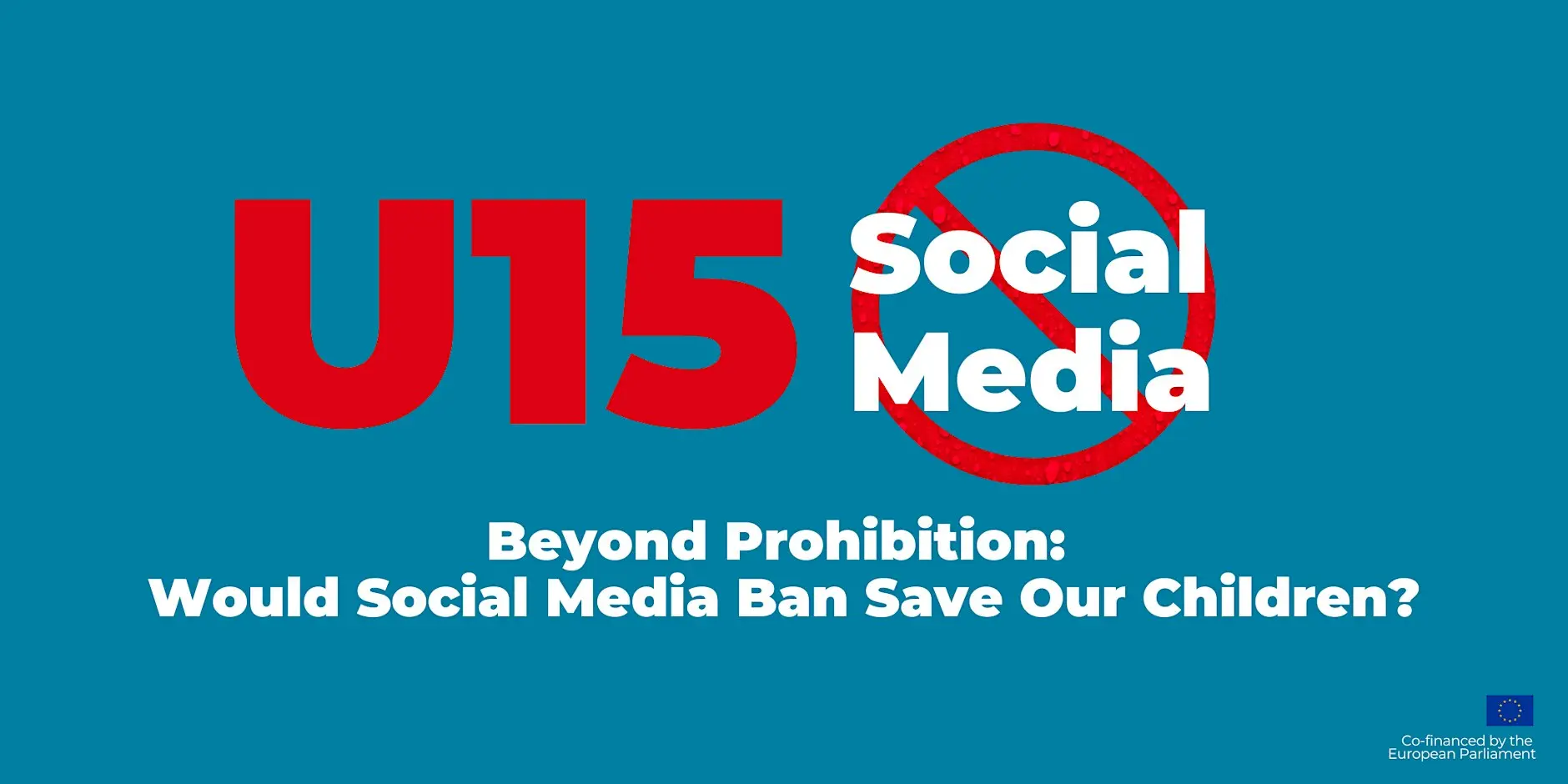
On 17 September, the European Commission proposed the EU Kids Act. It would bar children under 13 from social media and set 15 as the EU-wide minimum age for opening an independent account. Most people agree children need better protection online. The harder question is which measures will actually work, at what cost to privacy, competition and digital freedoms, and whether they can be enforced.
wEPICENTER and the European Liberal Forum are bringing together MEPs, the European Commission, researchers, civil society and industry for a breakfast discussion hosted by MEP Ana Vasconcelos (Renew Europe). The aim is to move past the “ban or no ban” debate. We will look at age verification, platform responsibility, safer design, transparency in recommendation systems and digital literacy, and ask how Europe can build a safer and freer online environment for young people.
This is a roundtable format, and all participants are invited to take part in the debate.
Register by 28 October: Eventbrite link. If you need accreditation to enter the European Parliament, please say so when registering and include the details of the ID you will bring on the day.